

What This Means for People

2.1 The Student in Transition
Consider what it actually feels like to be a student right now.
You are sitting in a building whose logic was settled before you were born. The room you are in was designed to deliver information to you at a pace determined by an adult at the front, in a sequence determined by a curriculum committee, measured by a test whose format has changed very little in decades. That system asks you to demonstrate knowledge acquisition on its terms, in its timeframe, and with its tools.
And in your pocket, or on the desk in front of you, is a tool that will do most of what the institution is asking of you in a matter of seconds.
The institution calls using that tool cheating. You call it Tuesday.
What makes this more than a technology problem is that the room itself was never organized around learning alone. The classroom of 25 to 30 students is also a supervision unit: a way of keeping a large number of children visible, accountable, and moving on schedule. Those two functions, education and governance, have always shared the same space, and the building was designed to serve both. The student navigating AI today is navigating that conflation too: sitting in a room built partly to manage them, being asked to develop the kind of independent thinking that managed environments don't naturally produce.
That is not a character failure. It is a genuinely disorienting position to be in, and the conversation around AI in schools has been slow to name it honestly. Most of what gets written about students and AI is really about adult anxiety: about shortcuts, about integrity, about what learning is supposed to feel like. Those concerns aren't wrong, but they locate the problem in the student rather than in the situation the student is navigating. That framing doesn't produce better outcomes. It produces more supervision.
The Distinction Worth Making
There is a real concern beneath the anxiety, and it deserves a more precise name.
Cognitive science is fairly clear that certain kinds of difficulty are not obstacles to learning. They are the mechanism of it. Working through a problem with insufficient information, retrieving something from memory rather than looking it up, revising a piece of thinking after it fails: these effortful processes build the kind of understanding that transfers to new situations. When AI removes that effort, it can remove the learning along with it. That's worth taking seriously.
Productive struggle is not the same as all struggle. The frustration of a poorly sequenced lesson is not building anything. The confusion of a student who doesn't have enough prior knowledge to make sense of what's being asked isn't productive difficulty. It's a curriculum design problem. Not every hard thing in a school day is hard in a way that matters.
The question the AI moment is forcing into the open is one that schools have mostly avoided asking directly: which difficulty is worth preserving, and why? That is not a question about student character. It is a design question. And it is one that the physical environment, the institutional structures, and the adults who shape both of them either answer intentionally or leave to chance.
What the Environment Needs to Do
When information is no longer scarce, the school building's original organizing logic starts to loosen. A room designed primarily for content delivery, where the teacher holds the knowledge and the student receives it, becomes harder to justify on those terms alone. AI does that job more patiently, more consistently, and at greater scale than any classroom can.
What the environment needs to provide instead is something harder to replicate: conditions for the kind of thinking that requires other people. Problems that can't be dissolved by a device because they depend on negotiation, on reading a room, on building something together that none of the individuals could have built alone. Situations where the student's relationship to uncertainty is part of what's being developed, not an inconvenience to be resolved before the real learning begins.
That's not a new insight. The reform era was reaching for it. What's different now is that AI has made the question harder to set aside. If the building isn't creating conditions for that harder kind of engagement, it isn't clear what it's for.
For district leaders writing briefs, that question has a spatial dimension that is easy to underestimate. Room size, adjacency, acoustic separation, the presence or absence of spaces that support genuine collaboration rather than parallel work: these decisions shape what kind of difficulty a student can actually encounter in the building. For design teams, the implication is similar. A building that looks flexible but is organized around individual workstations and screen-facing furniture is making a quiet argument about what learning looks like. A building with spaces that make interdependence possible, sized and configured for groups working through something genuinely complex, is making a different one.
The student in transition isn't waiting for the institution to resolve this. They are already living inside the contradiction, making sense of it largely on their own. The more useful question for the adults making decisions about buildings and programs may be this:
“What does the room need to become when the student no longer needs it to deliver information?”
2.2 The Educator in Transition
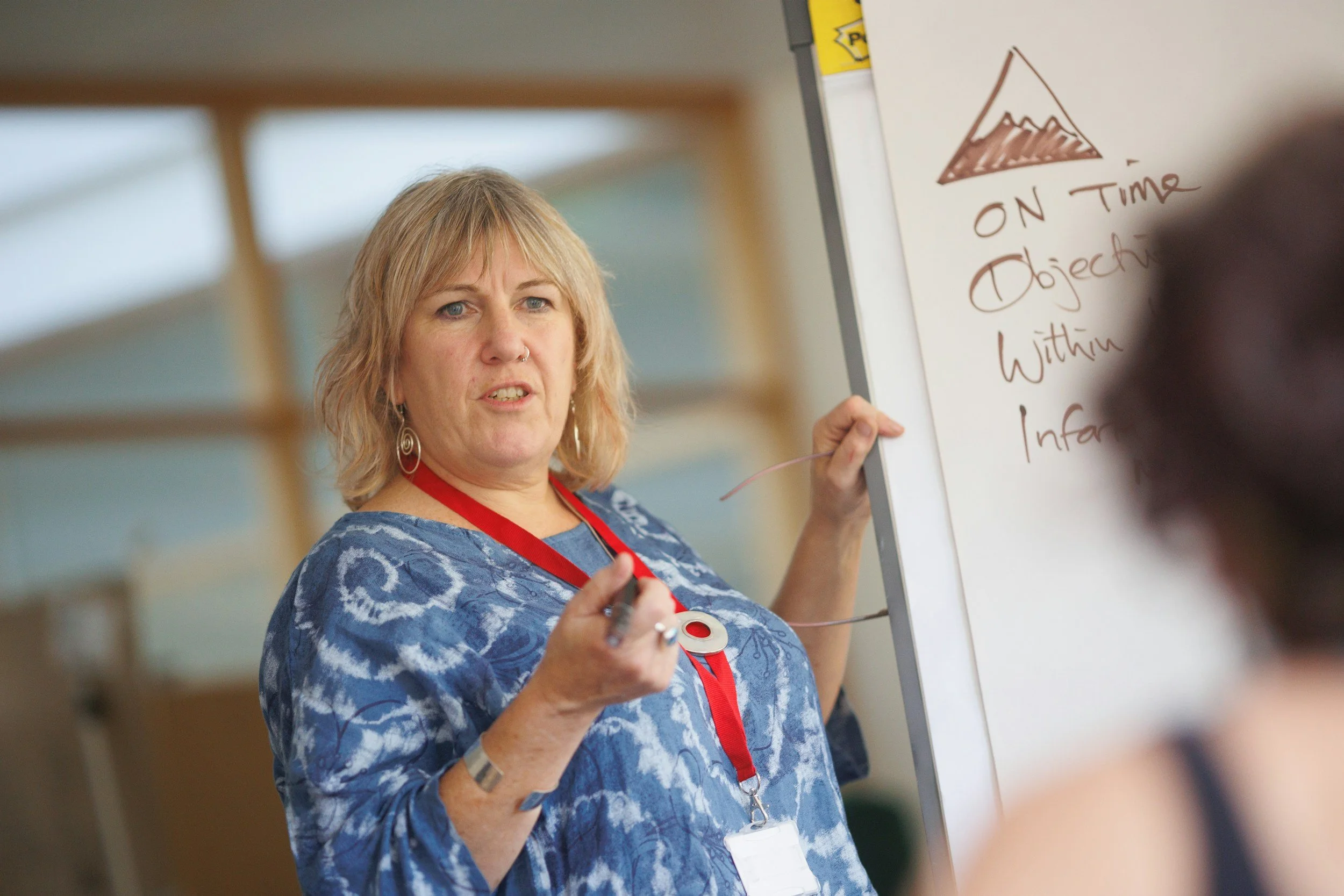
Consider what it actually feels like to be a teacher right now.
You have spent years, in many cases decades, building professional confidence around a particular kind of expertise. You know the content. You know how to sequence it, how to read a room, how to adjust when a concept isn't landing. That knowledge was hard-won, and it was the foundation of your authority in the classroom.
Now a tool exists that can explain most of what you teach, more patiently, in more formats, at any hour of the day, to any student who asks. Your students know how to use it. Some of them are more fluent with it than you are. And everyone in the room is quietly aware of that.
That's a specific kind of professional vulnerability. It doesn't have a clean precedent, and it hasn't been named honestly in most of the conversation about AI and teaching. What gets named instead is efficiency: AI will save teachers time, reduce administrative burden, free up energy for the work that matters. That may be true in parts. But it skips past something more fundamental, which is that the role itself is being asked to shift, and the institutions responsible for supporting that shift are largely still organized around the version of the job that is under pressure.
Three Pressures, One Room
The teacher navigating this moment is doing so inside a specific set of constraints that pull in different directions simultaneously.
The first is the students themselves. As the previous piece in this series explored, students are already living inside the contradiction: sitting in rooms designed for information delivery while carrying tools that make that function largely redundant. The anxiety, distraction, and uncertainty that produces doesn't disappear when the bell rings. It arrives in the classroom, and the teacher absorbs it. The relational and emotional demands on educators have grown, not shrunk, even as the efficiency narrative suggests otherwise.
The second pressure comes from the institution. Teachers are still evaluated primarily on content coverage and student performance on standardized tests. Those metrics were designed for a system organized around information transfer. They measure, reasonably well, whether students have acquired and can reproduce content. They measure less well whether students can think clearly under uncertainty, collaborate through disagreement, or apply understanding to problems they haven't seen before. A teacher who genuinely understands that the relational, facilitative version of their role is more valuable now may want to move toward it. But they are being graded on the old version of the job while being asked to perform the new one. That's not a personal failing. It's a structural bind.
The third pressure is the technology itself, and the supervision dynamic it has introduced. If part of a teacher's institutional role has always been accountability enforcement, keeping students on task, maintaining the conditions under which learning is supposed to happen, AI has made that function significantly harder to perform. Detecting AI use, adjudicating it, designing around it: these are adversarial postures layered on top of a relationship that depends on trust. The teachers navigating this most effectively tend to be the ones who have found ways to make the question largely irrelevant, by designing work that requires genuine human engagement rather than managing the tool. That's a meaningful insight. It's also a significant ask of someone already carrying the other two pressures.
What the Role Is Becoming
The reform era had a name for what the teaching role was moving toward: facilitator, mentor, guide on the side. The language became a cliche partly because the institutional conditions never fully supported the shift. Assessment systems didn't change. Professional development rarely gave teachers time to genuinely rethink their practice. And the physical environment, the room organized around the teacher at the front facing outward toward rows of students, kept expressing the old model even when the pedagogy was trying to move past it.
AI doesn't resolve any of that. But it does clarify what was always true: the most durable part of what a skilled teacher does has never been content delivery. It has been the relationship. The ability to see a specific student at a specific moment and know what that student needs. The capacity to hold a room through difficulty, to model how a thoughtful adult navigates uncertainty, to make a young person feel that their thinking matters. Those capacities are not under pressure from AI. They are, if anything, more visible now that the content function is no longer the clearest thing the teacher provides.
What is under pressure is the institutional framework that was supposed to support those capacities but was actually organized around something else. The professional development structures, the evaluation criteria, the physical spaces, the time available for genuine relationship: these were designed for a job whose primary function is shifting. Updating them isn't straightforward, and it isn't fast. But it is the actual design challenge, for district leaders thinking about how schools are structured and for architects thinking about what the room needs to make possible.
Given what we know about how slowly institutions move relative to the conditions they're responding to, the gap between what teachers are being asked to become and what the system is built to support is likely to widen before it narrows. The question worth sitting with, for anyone making decisions about school buildings right now, is whether the spaces being designed are built for the version of the teaching role that is passing or the one that is emerging.
“What does the room need to offer a teacher whose most valuable work now happens in relationship rather than in front of it?”
2.3 The Community at the Threshold
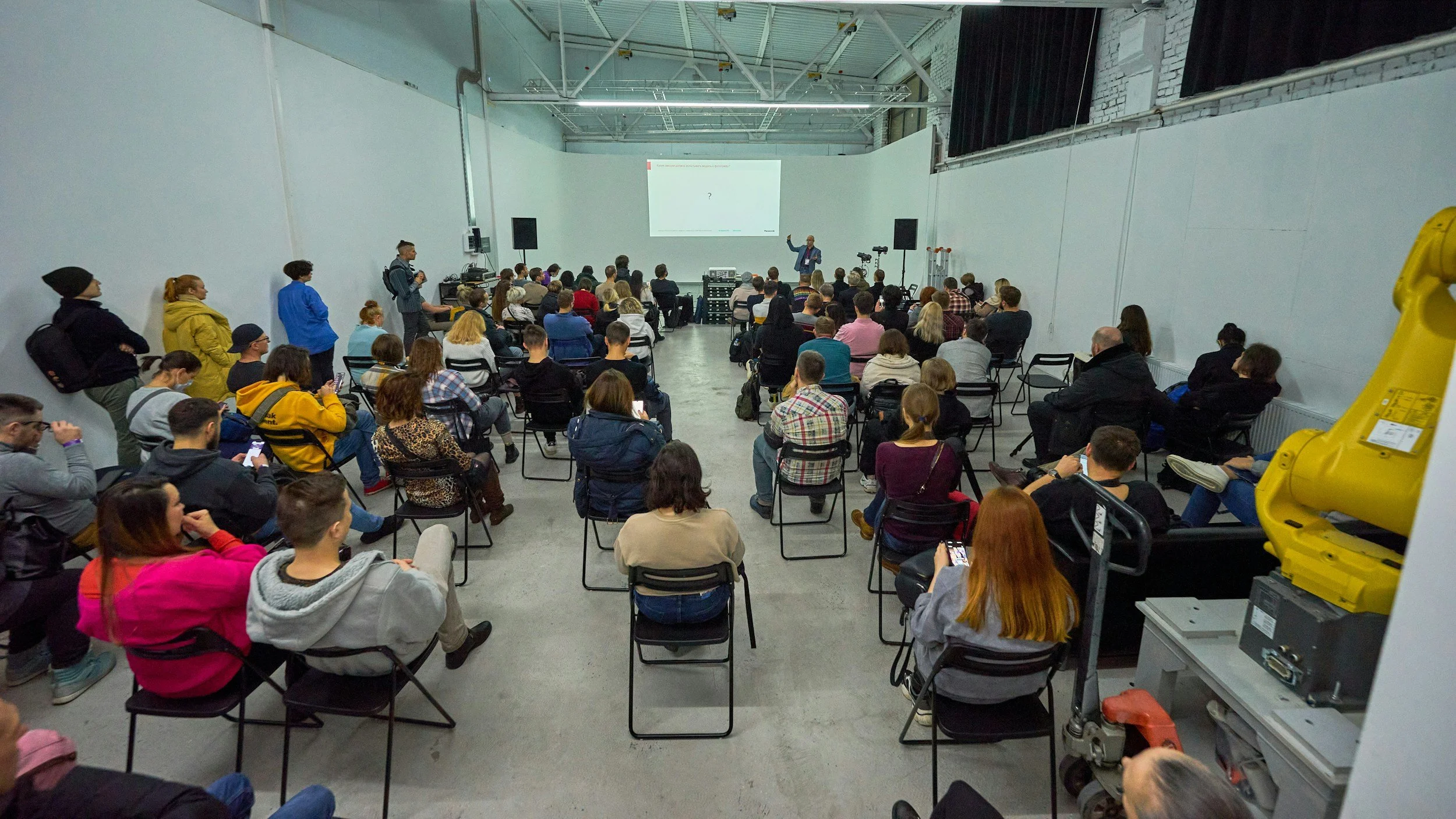
The conversation about AI and the future of school tends to focus on what happens inside the classroom. What it largely skips is what the school building is holding for the community around it, and what happens to those functions when the building's purpose is asked to shift.
More Than an Educational Institution
In most communities, the school is the largest publicly owned building most residents will ever use. It is where people vote. Where emergency shelters open when disaster hits. Where community events, sports seasons, and civic gatherings take place in spaces that belong, at least in principle, to everyone. Its presence on a block is a signal: the community has invested here, in something shared, for the long term.
That civic weight accumulates slowly and is easy to underestimate until it's gone. Communities that have lost schools to closure or consolidation rarely describe the loss primarily in educational terms. They describe it as a loss of identity, of gathering place, of the thing that made a neighborhood feel like a neighborhood. The building was doing something for the community that went well beyond the curriculum inside it.
Among the least discussed of those functions is one that shapes the daily lives of working families more directly than almost any other: the school as structured childcare. The school day and the school calendar are the armature around which adult employment is organized for a significant portion of the workforce. A parent who can drop a child at school at seven-thirty and pick them up at three-thirty has a predictable window of availability that makes employment possible. That isn't a side effect of public education. For many families, it is the precondition for everything else.
This function was never formally designed. It emerged from the structure of the school day, which was itself inherited from agricultural seasons and from social arrangements that no longer describe most families' lives. But it persists, quietly and essentially, as one of the primary ways the school building serves its community. And it is one of the first things at risk when conversations about distributed learning, flexible schedules, and AI-enabled personalization begin to reshape what the school day looks like.
What Modernization Assumes
The emerging vision of school as an application and collaboration hub, a place where students come together for the kinds of learning that require human presence while other learning happens more flexibly across time and place, is pedagogically coherent. It reflects a genuine understanding of what AI can and cannot do, and of what physical community makes possible that screens cannot replicate.
But it rests on assumptions about the home environment that are not evenly distributed across the communities schools serve.
A model that redistributes some learning outside the building also redistributes the structure, supervision, and safety the building was providing, onto families who may not have the resources, the space, or the schedule flexibility to absorb those functions. The student who thrives in a more distributed model tends to have a stable home, a quiet place to work, an adult available to support and redirect, and reliable access to technology and connectivity. Those conditions describe some students. They do not describe all of them, and the gap is not random. It follows the same lines as existing inequality.
Given what we know about how reforms travel through systems, the risk isn't that the modernization vision fails. It's that it succeeds for the students and families best positioned to benefit from it, while quietly withdrawing from the students and families who most needed what the building was already providing. That outcome doesn't require anyone to intend it. It only requires the assumption to go unnamed.
Who Gets to Shape What the Building Becomes
Community engagement processes for school planning are, in most districts, formally open. Meetings are held. Input is solicited. The record shows participation. What the record rarely captures is who was in the room, who wasn't, and whose daily reality shaped the questions being asked.
The families most dependent on the school's civic and caregiving functions are often the least represented in planning conversations. The hours, the format, the language, and the technical framing of those processes tend to favor the families with the most existing capacity to navigate institutions. The result is buildings shaped significantly by the preferences of those with the most options, serving communities whose members have the fewest.
That's not an argument against community engagement. It's an argument for being honest about what engagement processes actually capture, and intentional about reaching the voices they tend to miss. For district leaders, that honesty belongs in the brief-writing process, before the design team is even selected. For architects and designers, it belongs in how project goals are framed and whose experience is used to test whether a design is actually working.
A school building designed without that honesty may modernize beautifully on paper while withdrawing from the community it was built to serve. The gap between those two outcomes is not always visible in a floor plan. But it is felt, steadily, by the families who depended on what the building used to hold.
“If the school building’s function is changing, who is responsible for the functions it was quietly performing all along, and what does the answer require of the spaces being designed to replace them?”
2.4 The Equity Gap Beneath the Promise

Equality and equity are not the same thing, and the difference matters most when a system is changing.
Equality gives every student the same room, the same desk, the same path through the building, the same access to whatever the institution has decided to provide. In a resource-constrained system, that's often the only defensible answer: the same tile, the same ceiling height, the same furniture standard across every classroom in the district. It's fair in the most literal sense. It's also, for a significant number of students, insufficient.
Equity asks a different question: not what does every student receive, but what does each student actually need to engage, to belong, and to learn? Those two questions produce different buildings. A corridor designed for equal access moves everyone through the same path at the same width. A corridor designed for equitable access considers who is moving through it: the student navigating it in a wheelchair, the student with sensory sensitivities for whom a crowded hallway between classes is genuinely overwhelming, the student whose first language isn't English and who needs legible wayfinding that doesn't depend on reading the walls. Same path. Meaningfully different experience.
That gap between equal and sufficient is where school design has always struggled, and it is where AI is about to make the stakes considerably higher.
The Building Was Never Neutral
Every design decision in a school building expresses an assumption about whose experience is centered. Those assumptions are rarely explicit. They accumulate in the details: the acoustic environment of an open-plan learning space that works well for students who can filter noise and works poorly for those who can't. The shared collaboration area positioned at the building's social center, welcoming for students who are already comfortable in that social current and quietly marginalizing for those who aren't. The flexible furniture that signals progressive pedagogy but requires a physical capability and a social confidence to rearrange that not every student brings to the room.
None of these are malicious choices. They are the natural result of designing from a center of gravity that reflects the experiences most present in the room where decisions were made. The students whose needs were closest to the designer's assumptions move through the building with relative ease. The students whose needs were further from those assumptions encounter friction, quietly, consistently, in ways that accumulate across a school day and a school year.
In similar contexts, the students generating the most friction tend to be the ones already carrying the most: students with disabilities, neurodiverse learners, students from lower-income households, students whose home language and cultural reference points differ from the institution's defaults. The building didn't create those disparities. But it encodes them, and then expresses them, for the life of the structure.
The Promise and Its Conditions
AI has genuine democratizing potential in this landscape, and it deserves to be named honestly before the limitations are examined.
A patient, adaptive, always-available learning tool that adjusts its language, pace, and format to the individual student has real value for students the standard classroom has historically underserved. The neurodiverse learner who processes information differently and has spent years trying to keep up with a pace that wasn't set for them. The student with a reading disability who can now access content in formats that work with their processing rather than against it. The student in an under-resourced district whose teacher is stretched across thirty students and cannot differentiate meaningfully for each one. For these students, AI represents something the reform era was reaching for but rarely delivered: genuine personalization at the point of need, without requiring the student to wait for an adult to have a free moment.
That potential is real. It is also unevenly distributed in ways that mirror the inequalities already present in the system.
Realizing AI's promise requires conditions that don't arrive automatically with the technology. Reliable devices. Reliable connectivity, at school and at home. A stable enough environment to use the tool productively, without the noise, disruption, or competing demands that make sustained focus difficult. Adult support that guides the student's relationship with the tool rather than simply providing access to it. And a school culture that has worked through what AI-supported learning looks like in practice, rather than leaving students to navigate it alone.
Those conditions cluster. They are significantly more present in well-resourced schools and households than in under-resourced ones. Given what we know about how new tools travel through unequal systems, the communities with the most existing capacity tend to benefit first and most fully. The communities with the least tend to receive the technology without the surrounding conditions that make it work. The result isn't that AI fails in those communities. It's that it produces a different and thinner version of its promise, while the gap between what it delivers for some students and what it delivers for others quietly widens.
Where the Leverage Is
Neither the building nor the technology is inherently equitable or inequitable. Both are shaped by decisions made before the first student arrives, and those decisions are where the leverage actually lives.
For district leaders, the equity question belongs in the brief before the design team is selected. Not as a values statement appended to the program, but as a specific set of questions about which students the building needs to serve most intentionally, and what their experience of the building needs to feel like. Which students are currently experiencing the most friction in existing facilities, and why? Whose voice is missing from the planning process, and what would it take to include it? What does success look like for the student the current system has served least well, and how does the building support it?
For design teams, the equity frame changes what gets tested and against whose experience. A design that works well for the median student and adequately for most others is an equal design. An equitable design is tested against the students at the edges: the ones with the most complex needs, the least institutional support, and the most to gain or lose from the decisions being made. Those students are rarely in the room during design reviews. Making their experience visible requires deliberate effort, but it produces buildings that work better for everyone, because the conditions that support the most vulnerable students, clarity, calm, flexibility, and genuine belonging, tend to support all students.
AI will keep developing. The buildings being designed right now will still be standing when the technology looks entirely different from what it looks like today. The equity decisions embedded in those buildings will persist either way.
“Whose experience is being used to decide whether this building is working, and what would change if the answer were different?”